FNs 17 bærekraftsmål er verdens felles arbeidsplan for å utrydde fattigdom, bekjempe ulikhet og stoppe klimaendringene innen 2030. Et hovedprinsipp i bærekraftsmålene er hensynet til sårbare grupper (Leaving no one behind). Tidsskriftet ønsker å synliggjøre og arbeide for bærekraftsmålene. På denne siden finner du lenker til relevante artikler.
22.01.2018:
Regjeringen må ta initiativ til en handlingsplan for å utrydde hepatitt C. Hjemløse, personer med rus- og avhengighetslidelser, innsatte og sexarbeidere blir stigmatisert og marginalisert over hele verden. Flere overlappende risikofaktorer og negative livshendelser forsterker sosiale eksklusjonsmekanismer og gjør at gruppene også i høyinntektsland har ekstremt høy sykelighet og dødelighet (1). Kvinner er spesielt utsatt. Sosial eksklusjon dreper. Hepatitt er blant de største problemene (2). Injiserende rusbrukere har særlig høy risiko, og etter få år vil de aller fleste bli eksponert for...
08.01.2018:
Tedros Adhanom Ghebreyesus tiltro i juli som ny generaldirektør for Verdens helseorganisasjon. Lederskiftet kommer på et tidspunkt hvor organisasjonen står foran store utfordringer. Verdens helseorganisasjon (WHO) er en selvstendig enhet i FN med 194 medlemsland. Organisasjonen ledes på demokratisk vis av styret og verdens helseforsamling, som velger generaldirektøren etter nominasjon fra medlemslandene. Den demokratiske oppbygningen, som er én av Verdens helseorganisasjons styrker, er viktig for å kunne samle medlemslandene om globale folkehelseproblemer og utvikle strategier og initiativ på...
02.01.2018:
Systematisk populasjonsbasert registrering av helserelaterte hendelser er avgjørende for å kunne utvikle verktøy som kan sette oss i stand til å forbedre helsevesenet og de enkelte helsetjenestene, og for å gi grunnlag for forskning. I et fødselsregister står det oppført data om gravide kvinner, for eksempel demografiske data, sykdomshistorie, svangerskapskontroller og behandling under svangerskapet. Det blir også registrert data angående fødselen og det nyfødte barnet i en periode på opptil syv dager etter fødselen (1). Flere nordiske land etablerte fødselsregistre i epidemiologisk øyemed for...
25.12.2017:
One aim of the Sustainable Development Goals is to end the epidemics of neglected tropical diseases by 2030. A multifaceted approach is needed to tackle leishmaniasis, keeping in mind the parasite, as well as its vector, host and reservoir. Attention should be focused on sustainable and achievable solutions rather than fairytale goals, and biology should play a more prominent role. Leishmania is a highly adaptable parasite. At least 20 different species can cause the disease. Clinical manifestations include cutaneous (CL), mucocutaneous (MCL), visceral (VL, also known as kala-azar in Africa...
23.12.2017:
The relationship between the law and access to safe abortion services is complex. Country case studies from sub-Saharan Africa show how the political, economic and social contexts in which the laws are embedded often generate unexpected outcomes. Legal frameworks are recognised as vital for securing the right to health. The articulation between law, health policy and actual access to health services is not a straightforward matter. Unsafe abortion is perhaps one of the most neglected sexual and reproductive health problems in the world today. With almost 22 million cases annually, unsafe...
20.12.2017:
Norway has committed to the UN’s Sustainable Development Goals. Securing universal health coverage for all is one of the key objectives. This commitment challenges Norwegian practice and legislation relating to undocumented migrants’ access to healthcare services in Norway. In 2015, the Millennium Development Goals were replaced by the UN’s Sustainable Development Goals, which introduced new perspectives on global health (1). Whereas the Millennium Development Goals had highlighted poverty; the Sustainable Development Goals are broader in scope and aim to address poverty, inequality and...
12.12.2017:
Malnutrition represents a serious global burden with around 800 million people being undernourished and over 2 billion people being overweight or obese. The associated medical, developmental, social and economic consequences are serious, lasting and extremely costly for the affected families, communities as well as countries. While nutrition is increasingly being paid attention, rarely is it discussed in an all-encompassing way. It is worth noting that we are currently witnessing a decade of political actions aimed at ending hunger and all forms of malnutrition that exist worldwide. Important...
28.11.2017:
Global health initiatives have long focused on the health of poor people in poor countries. Changes in demographic, economic, and health patterns challenge our understanding about where to direct our attention. Most of the world’s poor now live in middle-income countries. How should this affect the distribution of development assistance for health? Should we give priority to poor people or poor countries? The Sustainable Development Goals were adopted by the United Nations in September 2015. These goals have broadened the global development agenda in general, and the global health agenda more...
28.11.2017:
The Zika outbreak in Brazil in 2015–16 had detrimental medical, financial and social consequences for many children and their families. This article seeks to explore the current challenges that they are facing, and how these can be met. A ‘One Health’ perspective can help to address these complex issues. The burden of the Zika outbreak in the tropical Americas from 2015–16 crucially encompasses challenges related to gender inequality, poverty, social stigma, as well as women’s actual and legal access to reproductive and maternal care, including safe abortions. Currently in Brazil, many of the...
23.11.2017:
Ethical dilemmas are part of everyday clinical practice, and doctors worldwide must make value-based decisions. In low-income countries with very limited resources, healthcare personnel and policymakers face ethical challenges. Ethiopian policies aim to improve the ethical decision-making competence of healthcare personnel. But what are the dilemmas experienced by Ethiopian doctors and how can training and professional development equip them to deal with the ethical challenges they face? In this text, we illustrate ethical challenges that doctors experience in a resource-constrained health and...
23.11.2017:
Multistakeholder partnerships, involving public and private actors, have become key instruments in global food and nutrition governance. Such partnerships have the potential for conflicts between profit and public health goals, which may harm the integrity of nutrition policy. How can conflicts of interest be adequately addressed, and by whom? Multistakeholder partnerships involving governments, international organisations, civil society and private sector actors have become key instruments for implementing the 2030 Agenda and the Sustainable Development Goals. In food and nutrition governance...
13.11.2017:
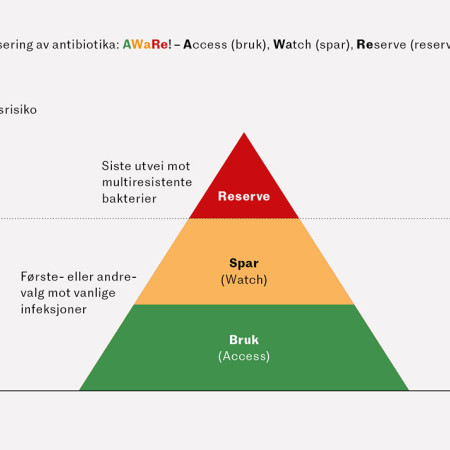
Antibiotikaresistens er fortsatt et lite problem i Norge. Det er likevel grunn til å være på vakt. Problemet med antibiotikaresistens må bekjempes både nasjonalt og globalt, både hos mennesker og dyr. Vi har alle et ansvar for å redusere antibiotikabruken. 15. november 2017 markerer det europeiske smitteverninstituttet (European Centre for Disease Prevention and Control, ECDC) den europeiske antibiotikadagen, og verdens antibiotikauke arrangeres av Verdens helseorganisasjon 13.–19. november. Deltagelse i slike markeringer er viktig for å øke bevisstheten rundt antibiotikaresistens blant...
02.10.2017:
Access to safe water and food is linked to global, regional and local climate changes. In some areas swift changes have entailed serious health-related consequences. An alarming example is found in the Aral Sea area of Central Asia. The Aral Sea area, located on the border between Kazakhstan and Uzbekistan, was once the fourth largest inland sea in the world. Since the 1960s, water volume has been reduced by a factor of fourteen (1). Tributary water to the Aral Sea derives from the rivers Amu Darya originating in Tajikistan, and Syr Darya originating in Kyrgyzstan. Early in the 20 th century...
18.09.2017:
In the 2030 Agenda for Sustainable Development in 2016, the international community agreed to ‘leave no one behind’. However, the community is doing precisely that by failing to act as millions living in conflict-affected areas are deprived of access to healthcare services. The few healthcare services operating in these situations are attacked with impunity. We need to seek new ways to protect healthcare workers operating in armed conflicts. In times of conflict, the number of persons in need of emergency medical care increases substantially. People are wounded in attacks, while deterioration...
18.09.2017:
I møtet med den papirløse migranten tydeliggjøres medisinens mening og samfunnets moral. Det lever en stor gruppe migranter her i landet som ikke har papirer på lovlig opphold. Tallene er svært usikre – estimatene varierer mellom 5 000 og 18 000 (1). Noen har fått avslag på asylsøknaden og oppholder seg her ulovlig, noen har ikke registrert seg hos myndighetene, noen er blitt utsatt for menneskehandel. Vi vet lite om de papirløse migrantenes helseproblemer. Tall fra Europa tyder på at det er økt forekomst av psykiske lidelser og at de for øvrig har mange av de samme helseproblemene som resten...
04.09.2017:
Helsepolitikk er mer enn fastlege og sykehus. Fremtidens helseutfordringer fordrer politikere som tør utvide sine perspektiver både geografisk og sektorielt. Mitt ønske for valgkampen er politikere som lover å prioritere brede helsepolitiske virkemidler. Jeg har lagt merke til at mange tenker på helsetjenester når de snakker om helsepolitikk. Dette er tjenester utført av helsepersonell, men utformet og styrt av politiske organer. For meg favner politikken langt videre. Helse formes av nesten alle politiske områder: utdanning, arbeid, ernæring, priser og avgifter og trafikkregler, for å nevne...
26.06.2017:
Reducing social inequality in health is at the core of international health work, but does not form part of the discussion on international preparedness plans for pandemic influenza. This is surprising given that influenza pandemic mortality rates are highest among those with the lowest socioeconomic status. This is not conducive to achieving the international goals of reducing social inequality in health and ensuring good health for all by 2030. The World Bank’s latest ‘Global Crisis Response Platform’ report claims that the most serious threats to human life and economic security are climate...
26.06.2017:
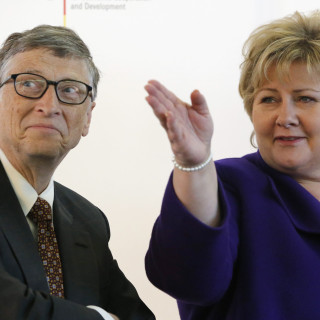
Norway has played a critical role in the recent launch of the new Coalition for Epidemic Preparedness Innovation, revealing Norway’s powerful position in global health. But how will Norway help put the coalition’s governance principles – political legitimacy, representation and accountability – into practice? And how will a more security-based approach impact Norwegian global health policy and research? On January 19, 2017, a new Coalition for Epidemic Preparedness Innovation entered the global health architecture. Launched at the World Economic Forum by Norwegian Prime Minister Erna Solberg...
26.06.2017:
As the landscape of global health is changing markedly, we launch our new article series; "Global Health in the Era of Agenda 2030". The Journal of The Norwegian Medical Association (Tidsskriftet) issued its first special edition on global health in 2011 (1). Now is the time to broaden the scope. To foster insight and better understanding of the recent developments in global health among health professionals, the Centre for Global Health, University of Oslo, and the Norwegian Agency for Development Cooperation (Norad), in collaboration with Tidsskriftet, have invited contributions to an...
30.03.2017:
Klimaendringene skyter fart. Det truer den globale helsen – men gir også muligheter. Året 2016 ga vår klode flere bekymringsfulle klimarekorder: Det ble det varmeste som noen gang er registrert, nivået av CO₂ i atmosfæren nådde nye rekorder og havnivåene har aldri vært høyere (1). Nå viser nye tall fra World Meteorological Organization (WMO) at ekstremene fortsetter (1). I februar 2017 ble det bare i USA satt eller tangert over 11 000 varmerekorder, samtidig som Nord-Afrika og den arabiske halvøy hadde uvanlig kulde. Andelen CO₂ i atmosfæren fortsetter å øke. Og vinteren i Arktis har vært...
21.03.2017:
Sentralstyret vedtok i oktober å legge ned utvalg for menneskerettigheter, klima og global helse. Tidligere utvalgsmedlemmer er svært bekymret for fremtidig håndtering av disse viktige, fagovergripende temaene i foreningen. Retten til helse er nedfelt som en grunnleggende menneskerettighet. Krig, konflikt og klimaendringer gjør at stadig flere mennesker utsettes for trusler mot liv og helse. I mange land bruker maktapparatene helsepersonell i tortur eller annen umenneskelig behandling av fanger, opposisjonelle og undertrykte minoriteter. Det finnes mange alvorlige eksempler på at retten til...
07.03.2017:
God håndhygiene er et av de mest effektive tiltakene for å forebygge spredning av antibiotikaresistente bakterier. Det er på tide å ta dette på alvor. En ny nasjonal veileder for håndhygiene ble lansert i oktober 2016. Håndhygiene, utført på rett måte til rett tid, hindrer overføring av sykdomsfremkallende bakterier og reduserer forekomsten av helsetjenesteassosierte infeksjoner. Det igjen fører til redusert antibiotikabruk og redusert resistensutvikling (1). Håndhygiene og andre smitteverntiltak er også avgjørende for å hindre spredning av allerede resistente mikrober til andre personer...
13.01.2017:
Prioritering betyr å si nei til gode tiltak. Som leger har vi ansvar overfor den enkelte pasient, men også for å jobbe for en rettferdig fordeling av ressursene. Velferdsstatens bærekraft i fremtiden står og faller på dagens prioriteringer. Uansvarlig pengebruk og utnytting av jordens ressurser vil gå ut over kommende generasjoner. Gode hensikter basert på menneskers likeverd møter vanskelige avveininger, ikke bare i helsetjenesten. Som leger har vi den enkelte pasients beste for øye. Tre prioriteringsutvalg de siste 25 år har gitt oss grunnlag for å handle med utgangspunkt i sykdommens...
07.06.2016:
Angrep på helsepersonell i krig er intet nytt fenomen. Men brutaliteten i krigføringen i Syria har rystet en hel verden. Helsepersonell er blitt målskiver i en nøye kalkulert terrorstrategi I Aleppo, den syriske byen som historisk sett har vært så sentral i forskjellige imperier, blir det igjen skutt fra skyteskårene i en av verdens eldste steinfestninger. Byen var lenge Syrias største, med over 2,1 millioner innbyggere. Mange har nå forlatt byen, mange har mistet livet i krigen. De menneskelige lidelsene er av et omfang det er vanskelig å ta inn over seg. Ved utgangen av fjoråret var kun en...
24.05.2016:
Myggen stikker, og noen stikkes oftere enn andre. Konsekvensene av zikaepidemien rammer kvinner, og fattige gravide rammes hardest I Uganda er ikke myggbårne sykdommer noe nytt – i en frodig skog som heter Zika har det vært forsket på myggbårne virus siden 1930-årene. I 1947 ble det isolert et flavivirus som ble oppkalt etter denne skogen (1). Zika betyr gjengrodd (2), og viruset har da også levd i skyggen i nesten 70 år. Inntil nå. I februar 2016 ble zikaepidemien erklært som global folkehelsekrise av Verdens helseorganisasjon, og det er anslått at millioner av nye sykdomstilfeller vil oppstå...